18th May 2026
Evidence-In-Health Conference 2026 (Ghana)
EAM Consult (Ghana) is excited to announce the maiden edition of the Evidence-In-Health Conference 2026 — a multidisciplinary conference focused on advancing the production and use of health-related evidence synthesis for informed decision-making in Ghana and across Africa. This year’s conference, funded by EAM Consult, is being organized under the theme: “Strengthening Evidence Synthesis for Health Policy and Practice in Ghana.”
The conference will bring together students, researchers, academics, healthcare professionals, and policymakers to explore key concepts, processes, and practical applications in health-related evidence synthesis through plenary sessions, interactive workshops, and panel discussion.
📅 Date: Saturday, July 25, 2026.
📍 Venue: University Accommodations & Conferences (MasterCard Foundation Impact Building), Kwame Nkrumah University of Science and Technology, Kumasi, Ghana.
🕗 Time: 8:00 AM GMT
🔗 Register here: Registration for Evidence-In-Health Conference 2026 [applications for in-person attendance are now closed].
📝Conference schedule: Programme Itinerary for Evidence-In-Health Conference 2026
We look forward to engaging partners and stakeholders committed to strengthening evidence synthesis capacity and evidence-informed decision-making in Ghana and Africa.
📧 For inquiries: eamparacleteconsult@gmail.com
Please see below the concept note for the Evidence-In-Health Conference 2026. STAY TUNED!
—————————————————————————————————————————————————————————————————————————————
Concept Note for Evidence-In-Health Conference 2026 (Ghana)
Theme: Strengthening Evidence Synthesis for Health Policy and Practice in Ghana
1. Background and Rationale
Evidence synthesis — particularly systematic reviews, scoping reviews, and meta-analyses — plays a critical role in informing healthcare decisions, policy development, and clinical practice. Globally, there is increasing recognition of the need to bridge the gap between research evidence and its application in real-world settings.
While primary research output has increased in Ghana and Africa, the production and integration of synthesized evidence into health policy and practice remains limited due to:
- Limited local capacity in evidence synthesis methods
- Inadequate training opportunities
- Weak linkages between researchers and policymakers
The Evidence-In-Health Conference 2026 aims to build foundational capacity, foster collaboration, and promote the production and use of evidence synthesis in health and related sectors.
2. Goal
To strengthen capacity and promote the production and use of health-related evidence synthesis for informed decision-making in Ghana and Africa.
3. Objectives
- To introduce participants to core concepts and methods of evidence synthesis
- To provide foundational hands-on training in selected key steps in evidence synthesis (such as search strategy development, study screening and selection, and critical appraisal).
- To showcase production and applications of health-related evidence synthesis in Ghanaian, African, and global contexts
- To foster networking and collaboration among students, researchers, healthcare professionals, policymakers, and other relevant stakeholders
- To encourage the translation of evidence into health policy and practice in Ghana and Africa
4. Target Audience
- Undergraduate and postgraduate students
- Academics and researchers
- Healthcare professionals e.g., clinicians, public health practitioners
- Policymakers (Ministry of Health, Ghana Health Service)
Expected number of in-person attendees: ~100
5. Conference Format
The conference will be a 1-day in-person event structured into:
- Opening ceremony and keynote
- Morning plenary (foundational sessions)
- Midday hands-on workshops
- Afternoon thematic presentations
- Networking and engagement session
- Closing session
6. Key Thematic Areas
- Foundations of Evidence Synthesis
- Evidence Synthesis Methods
- The Evidence Ecosystem
- Evidence-to-policy translation
- Applications in eye health, disability and rehabilitation, infectious diseases, and other related health subjects
- Innovations (AI tools, automation in reviews)
7. Expected Outcomes
By the end of the conference, participants will:
- Understand key concepts and processes in evidence synthesis
- Gain foundational practical skills in literature searching, study screening and/or critical appraisal
- Appreciate the role of evidence synthesis in policymaking and practice
- Establish professional networks and collaborations
8. Expected Outputs
- Conference report
- Training materials and slides
- Participant contact/network database
- Increased interest in evidence synthesis projects among participants
9. Implementation Plan
Pre-Conference
- Develop programme and identify speakers
- Open registration (online)
- Prepare training materials
- Arrange venue and logistics
Conference Day
- Deliver sessions as scheduled
- Facilitate workshops and discussions
- Document/video-record proceedings
Post-Conference
- Disseminate report
- Share materials with participants
- Follow-up engagement (mailing list, future training)
10. Monitoring and Evaluation
- Pre- and post-event knowledge assessment
- Participant feedback forms
- Attendance tracking
- Evaluation of workshop outputs
11. Logistics
- Venue: Large-sized Conference Room (100-seater capacity), University Accommodation And Conferences (Mastercard Impact Building), KNUST, Kumasi, Ghana
- Equipment: Projector, microphones, internet access, poster boards,
- Materials: Notepads, pens, posters, pull-up banners, promotional flyers and brochures
- Refreshments: Tea break and lunch break
12. Sustainability and Follow-Up
- Establish a community of practice in health-related evidence synthesis
- Encourage student-led evidence synthesis projects via future Capacity Building for Evidence Synthesis Programme (CBESP)
- Link participants to ongoing national/global initiatives
- Plan future training workshops (for researchers, academics, healthcare professionals, policymakers, and other relevant stakeholders)
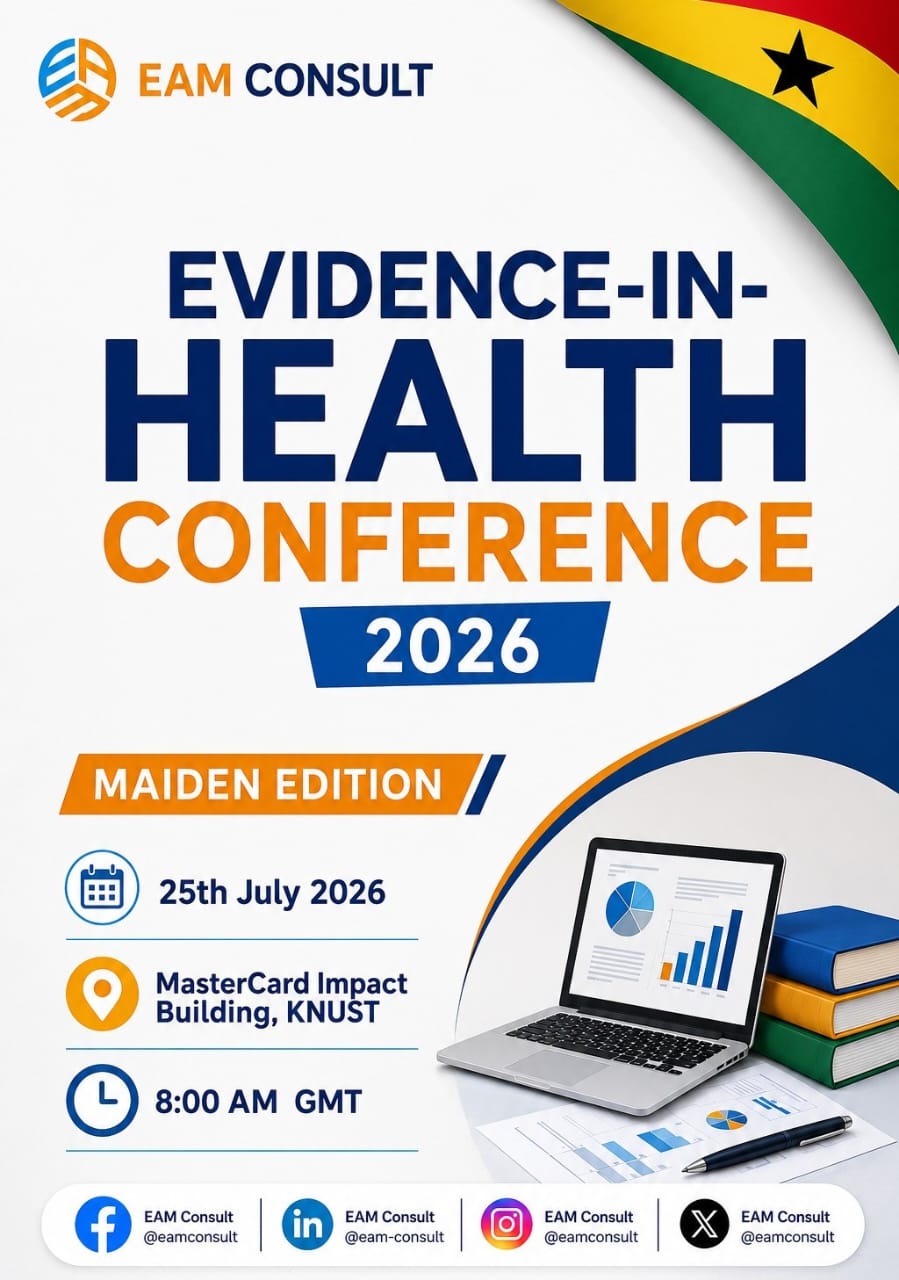
Flyer for advertisement
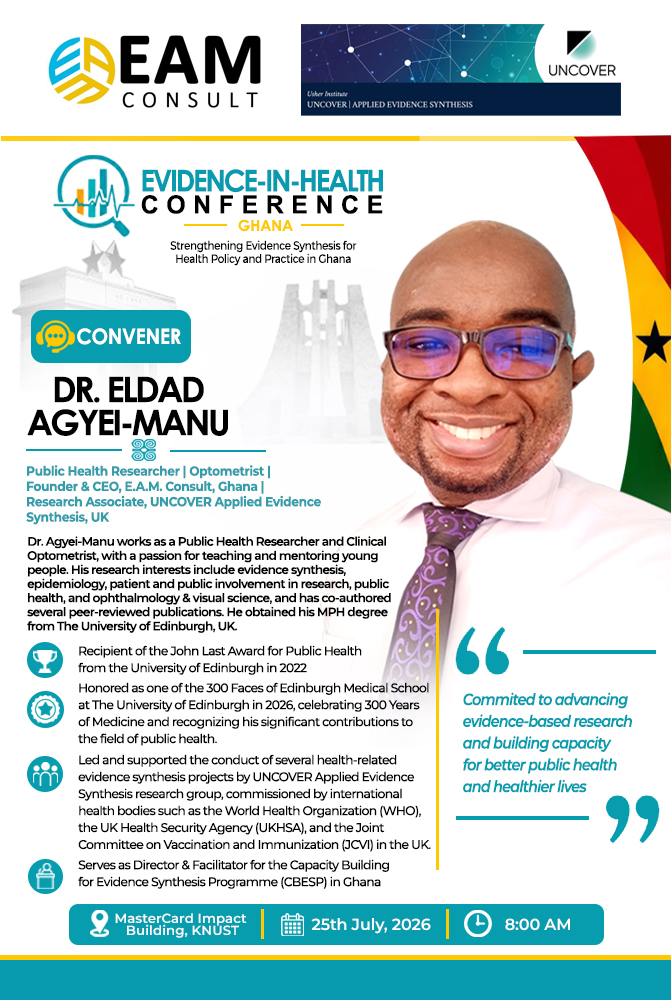
Dr. Eldad Agyei-Manu
Convener / Facilitator, Workshop B: Systematic Searching
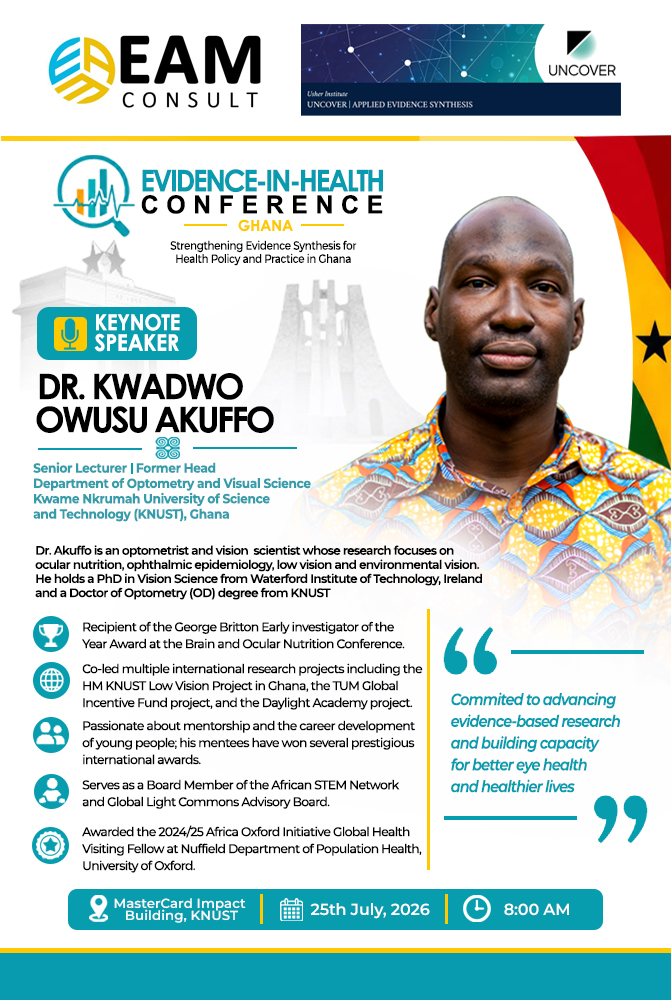
Dr. Kwadwo Owusu Akuffo
Topic: Why Evidence Synthesis Matters for Health Policy and Practice in Ghana
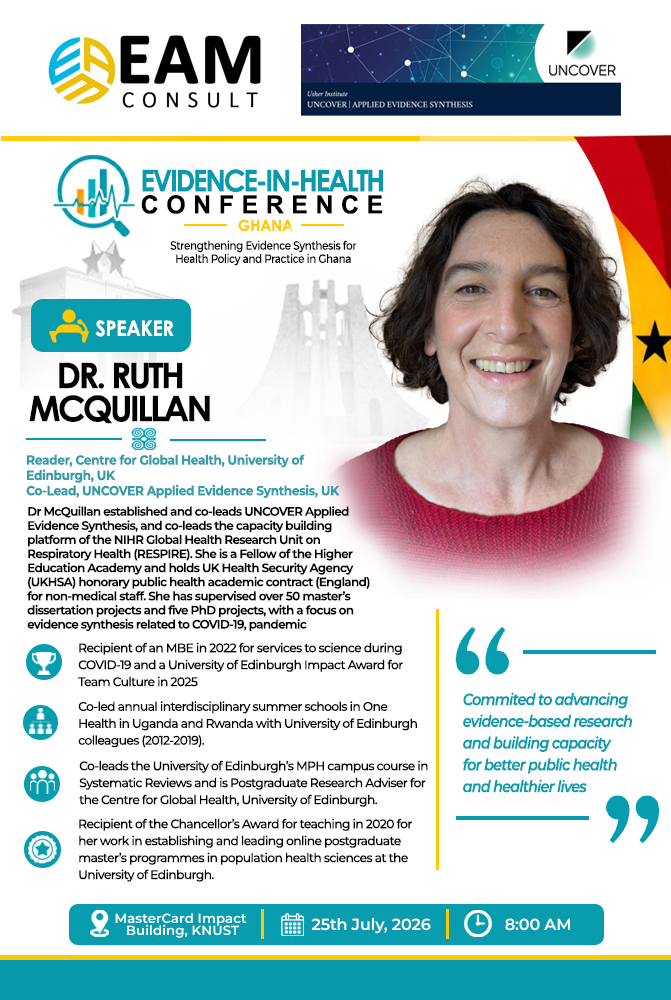
Dr. Ruth McQuillan
Fraternal message from UNCOVER Applied Evidence Synthesis, University of Edinburgh, UK
Presentation topic: Rapid review of public health and social measures (PHSM) for pathogens that spread by direct contact
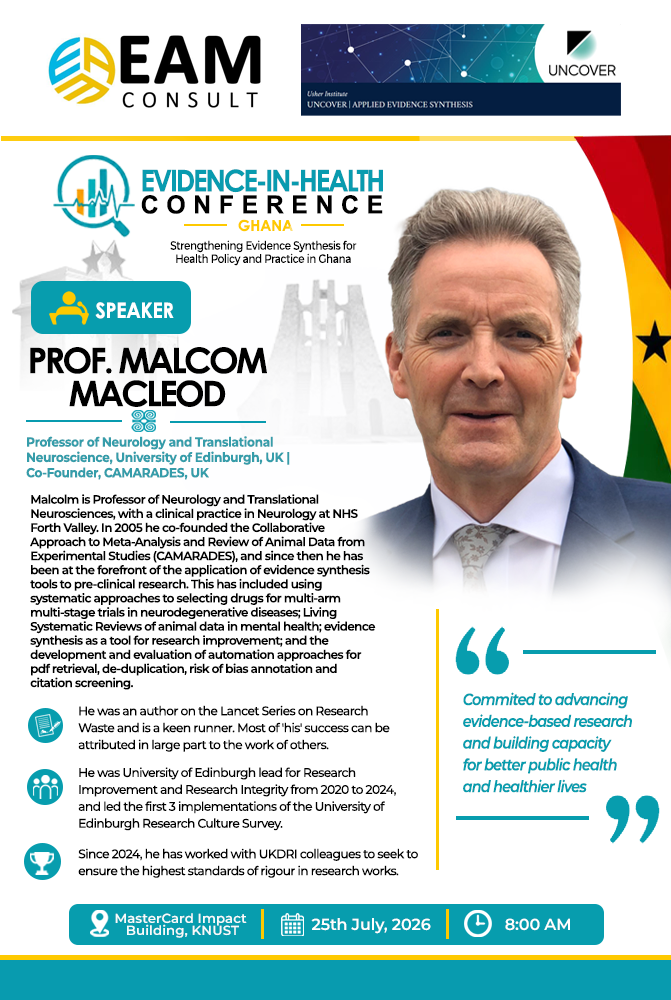
Professor Malcolm MacLeod
Topic: Innovations in Evidence Synthesis (Use of AI and software tools)

Dr. Adwoa Gyamfi
Topic: Foundations of Evidence Synthesis & Methods Overview
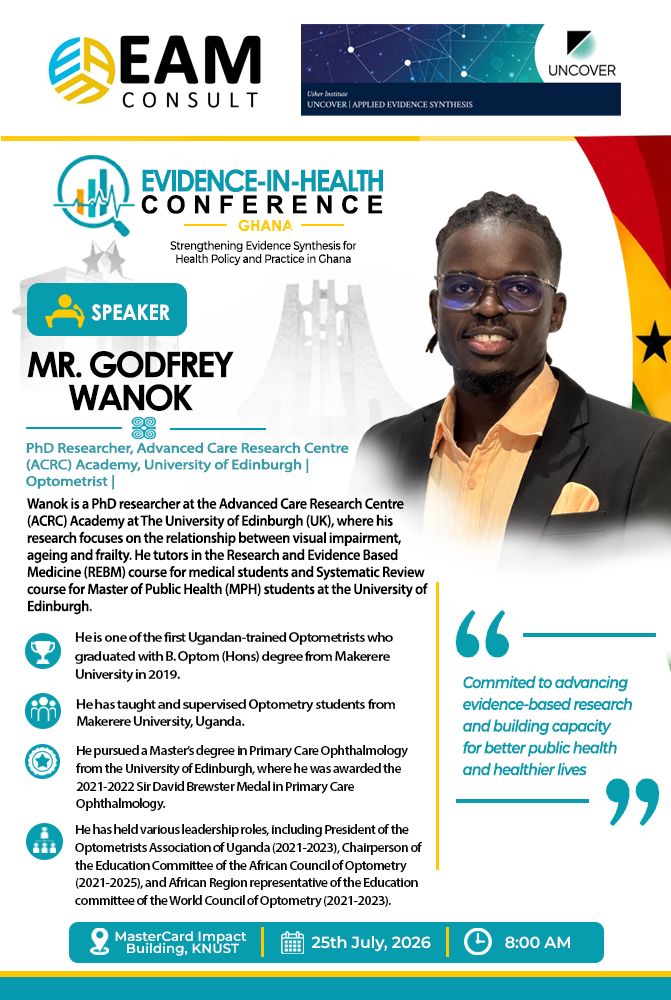
Mr. Wanok Godfrey
Topic: The Evidence Ecosystem
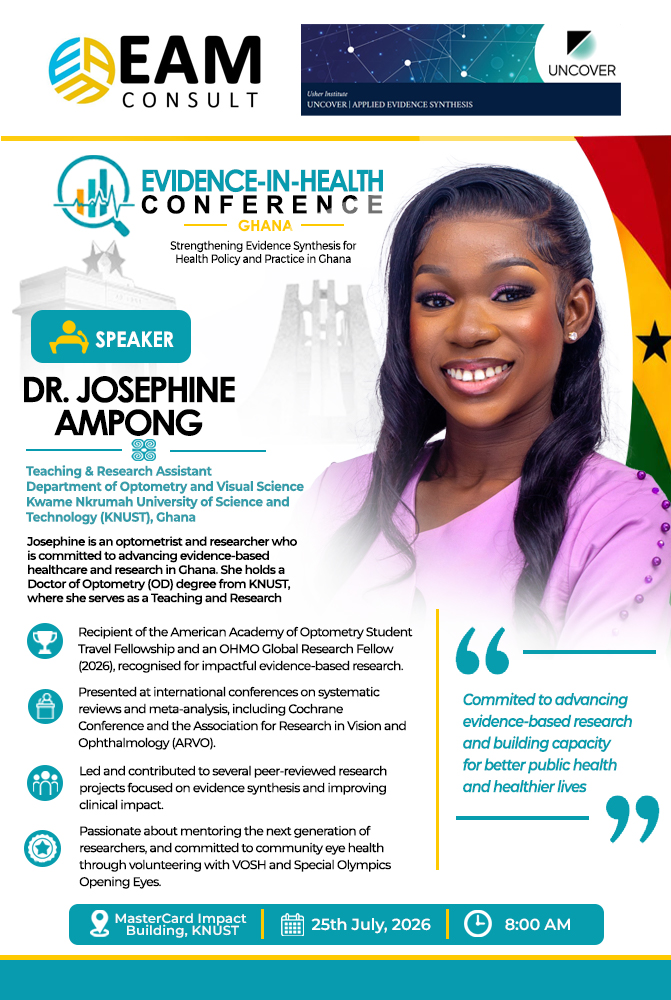
Dr Josephine Ampong
Topic: Low vision services in sub-Saharan Africa – a systematic review
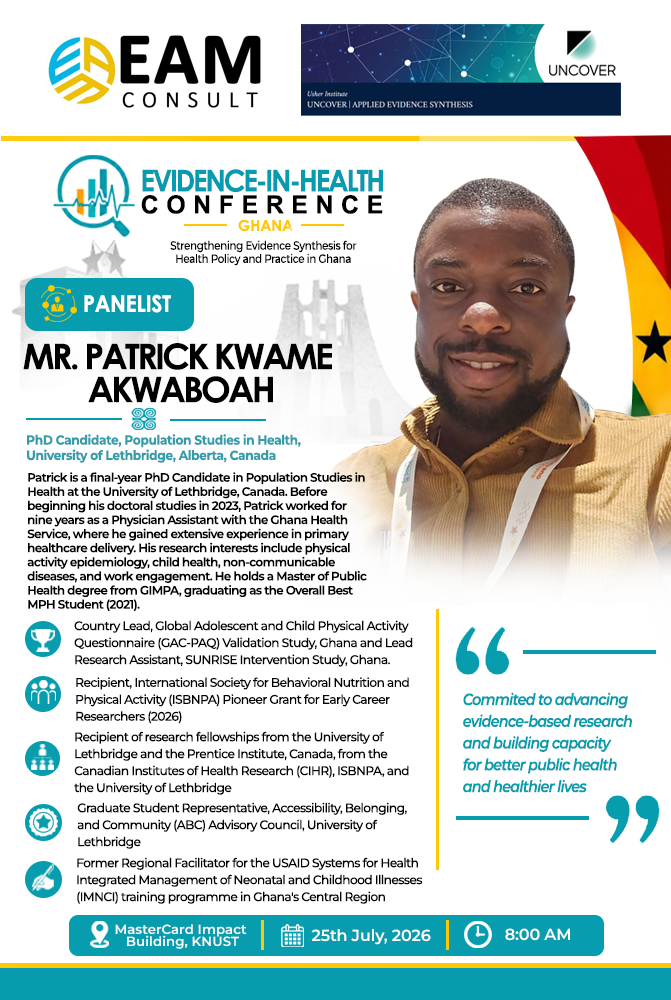
Mr. Patrick Kwame Akwaboah
Panel Discussion Topic: Strengthening Capacity for Evidence-Informed Health Policy and Decision-Making in Ghana: Bridging Research, Training, and Practice
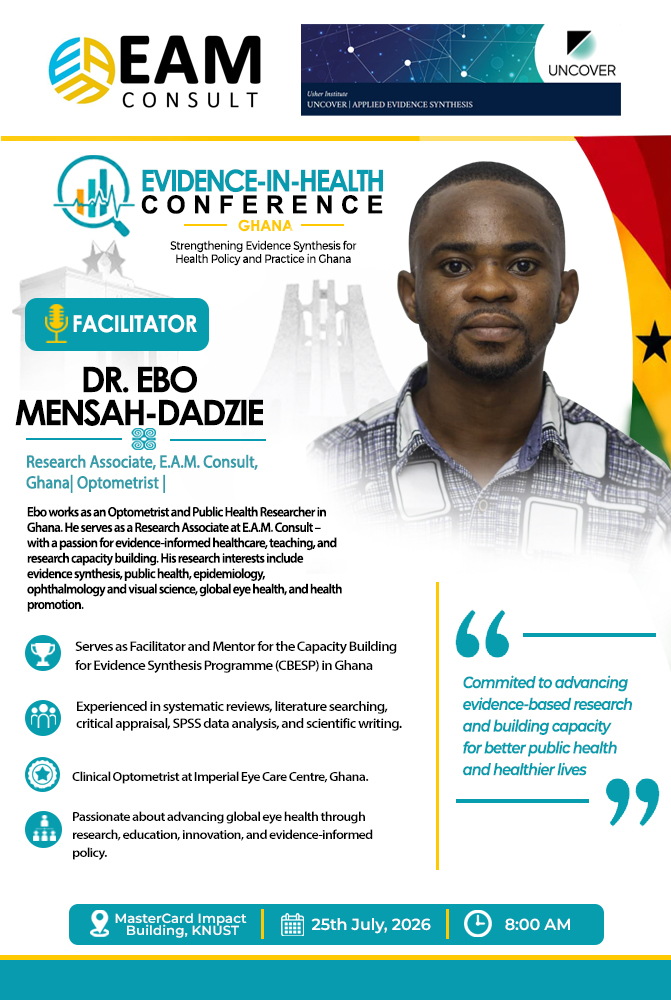
Dr. Ebo Mensah-Dadzie
Facilitator, Workshop A: Formulating A Research Question

Mrs. Rebecca Atta-Osei
Facilitator, Workshop C: Criticial Appraisal
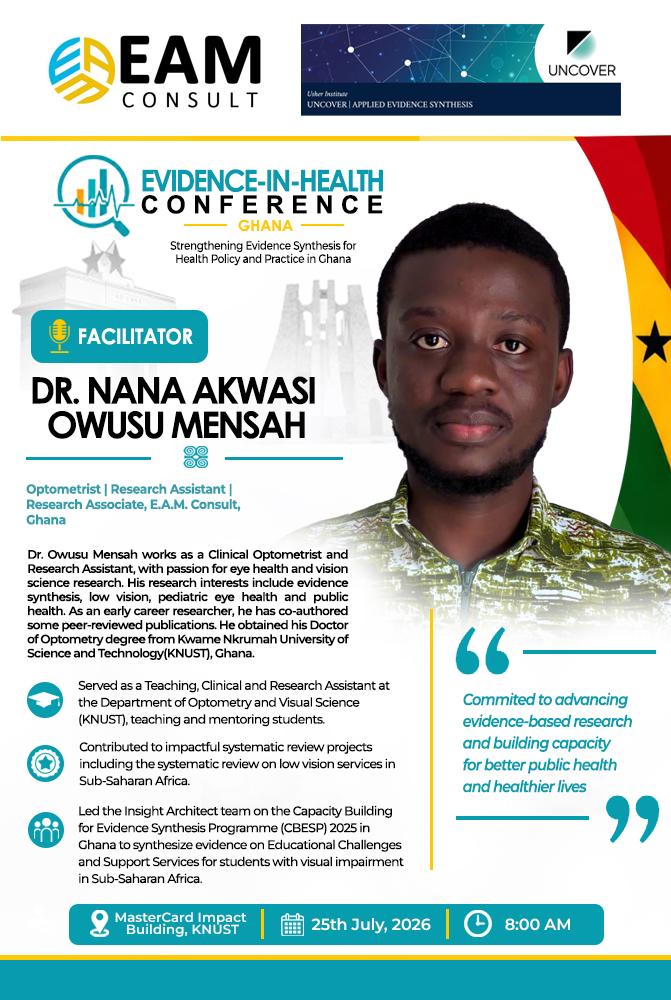
Dr Nana Akwasi Owusu Mensah
Coordinator & Facilitator, Interactive Training Workshops