
5th March 2026
E.A.M. Consult at the West African Low Vision Workshop 2026
The maiden West African Low Vision Workshop 2026 was hosted at Kwame Nkrumah University of Science and Technology (KNUST), Kumasi, Ghana from 27th February to 1st March 2026. This Workshop was organized as part of the HM KNUST Low Vision Project – a collaboration between Kwame Nkrumah University of Science and Technology, Kumasi (Ghana) and Hochschule Munchen University of Applied Sciences (Germany), with support from Else Kroner Fresenius Stiftung – aimed at enhancing access to comprehensive low vision assessment and care, strengthening the capacity of eyecare professionals in low vision assessment, and promoting research and innovation in vision rehabilitation in Africa.
In his opening address, Dr. Kwadwo Owusu Akuffo, Senior Lecturer in the Department of Optometry and Visual Science, KNUST and Ghana Lead for the HM KNUST Low Vision project, explained that the project is modelled on the World Health Organization’s integrated, tiered approach to low vision care and aligned with the Global SPECS 2030 initiative, which seeks to make low-vision services available at all levels of care. “The HM-KNUST Low Vision Project has demonstrated what is possible through collaboration, commitment and a shared vision,” he stated, noting that the network of centres established under the initiative has significantly improved access to services for persons with irreversible vision impairment.
The keynote speaker, Prof. Werner Eisenbarth, German Lead for the HM KNUST Low Vision Project, highlighted the importance of research collaboration among the established various low vision centers, noting that data generated through joint studies would help strengthen eye care structures and inform national health policy. He said continued implementation of the project could see approximately 400 patients receiving low vision care annually, while about 100 students would be trained each year. “The knowledge gained from this study is to inform stakeholders and facilitate the implementation of a national health policy to address visual impairment,” he said.
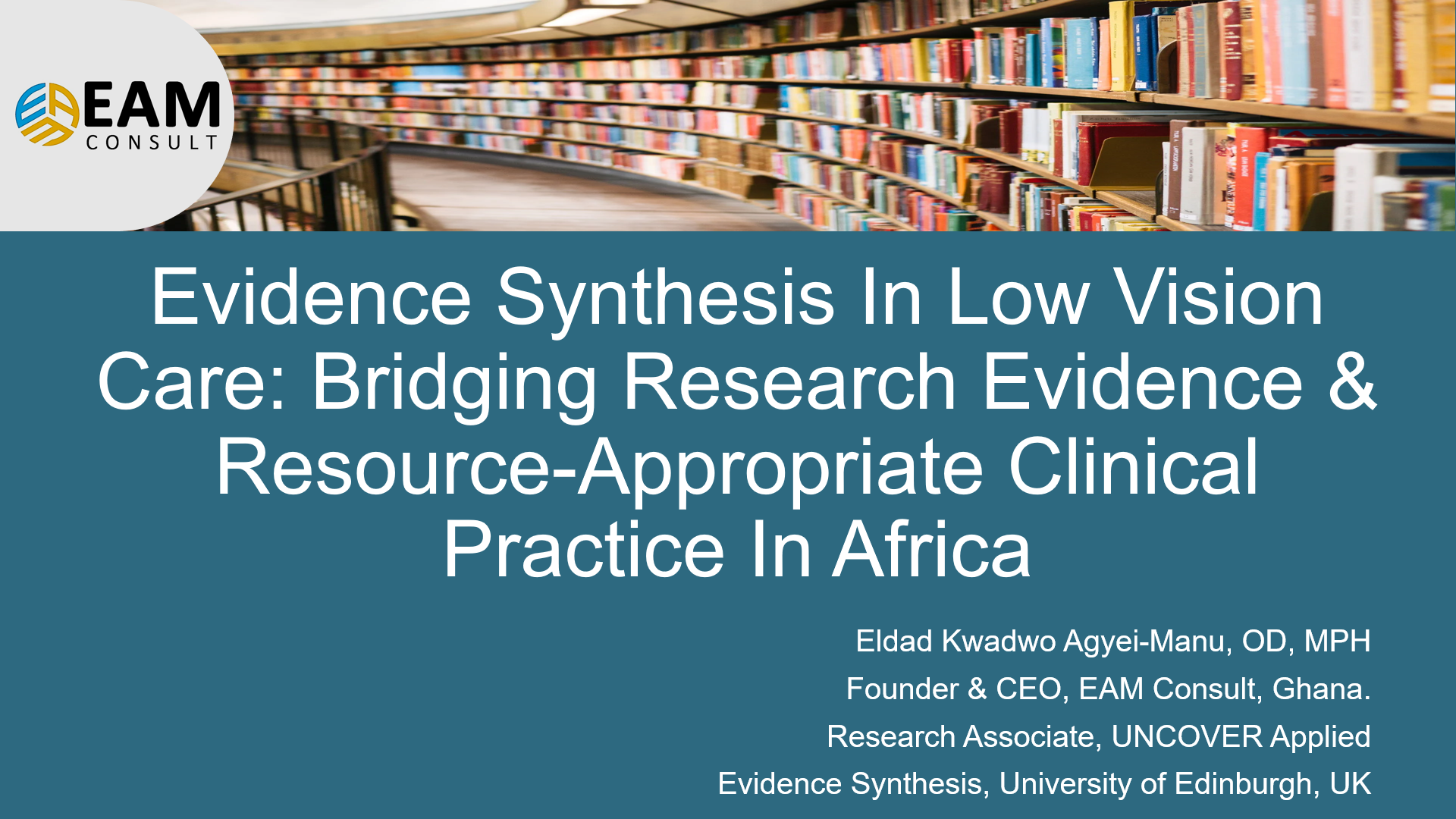
As part of the activities for this Workshop, the Founder & CEO for E.A.M. Consult, Dr. Eldad Agyei-Manu, delivered a guest lecture on the topic: “Evidence Synthesis In Low Vision Care: Bridging Research Evidence And Resource-Appropriate Clinical Practice In Africa”. In his presentation, he discussed the need for evidence synthesis to inform better clinical decision-making, efficient use of limited resources, and guideline development and policy formulation for low vision care in Africa. He emphasized that effective implementation of evidence synthesis into low vision care within the African context depends on these interconnected pillars: capacity building for human resources for eye health, integration of evidence-based practices and policies into existing eye health systems, and co-creation of evidence. “As part of our contributions to help build the capacity of [undergraduate and postgraduate] students in Ghana, E.A.M. Consult has introduced the maiden programme called Capacity Building for Evidence Synthesis Programme. This year’s programme is being delivered in collaboration with the Department of Optometry and Visual Science and the Department of Disability and Rehabilitation Studies (KNUST), and we aim to train these students to build evidence synthesis skills. One of the teams on this Programme is working on a systematic review aimed at synthesizing evidence on the educational challenges and support services that are available to students with visual impairment in mainstream Secondary and Higher Educational Institutions in Sub-Saharan Africa. And we are hoping that the findings from this review will be useful to various policymakers to help improve inclusive education,” he stated.
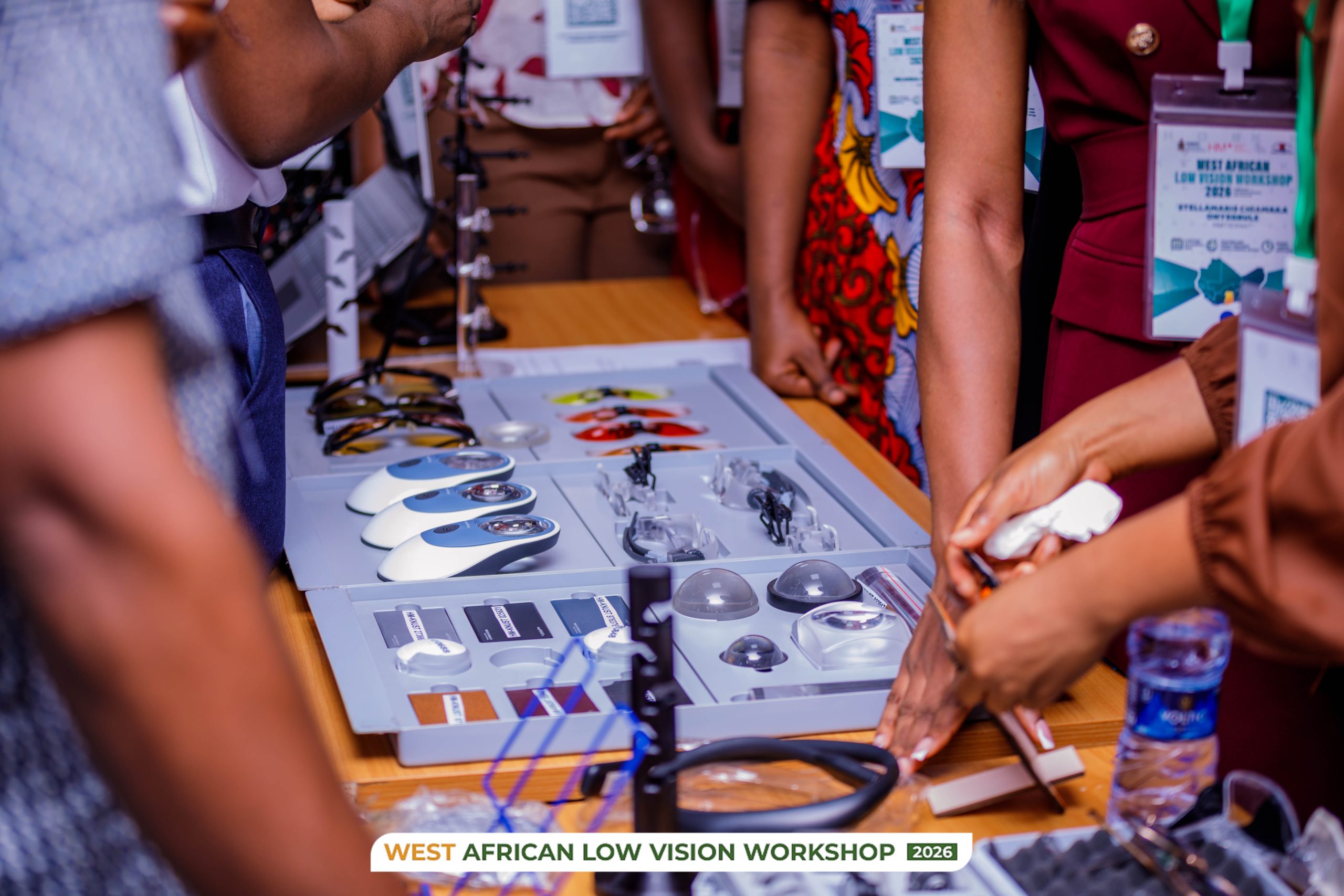
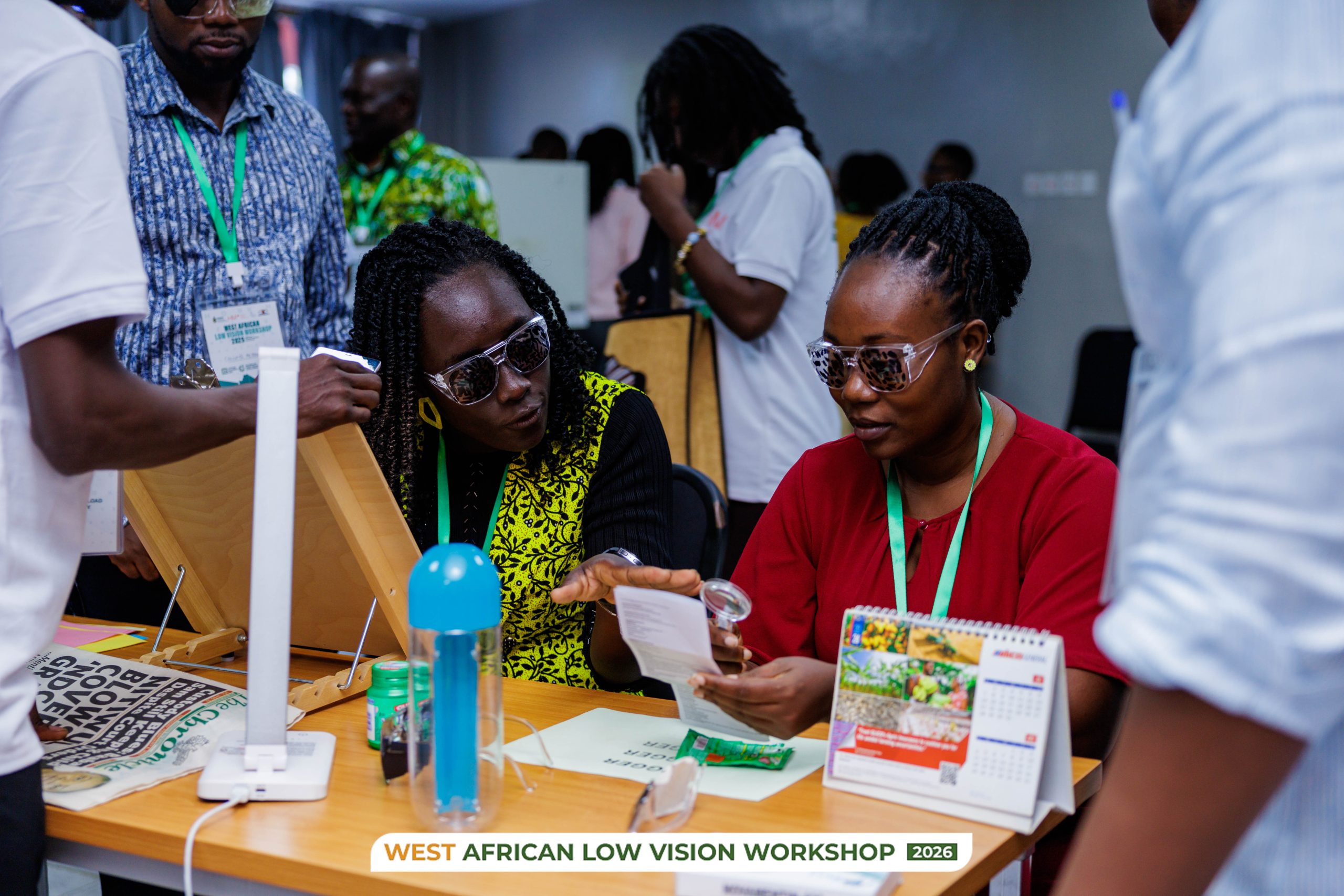
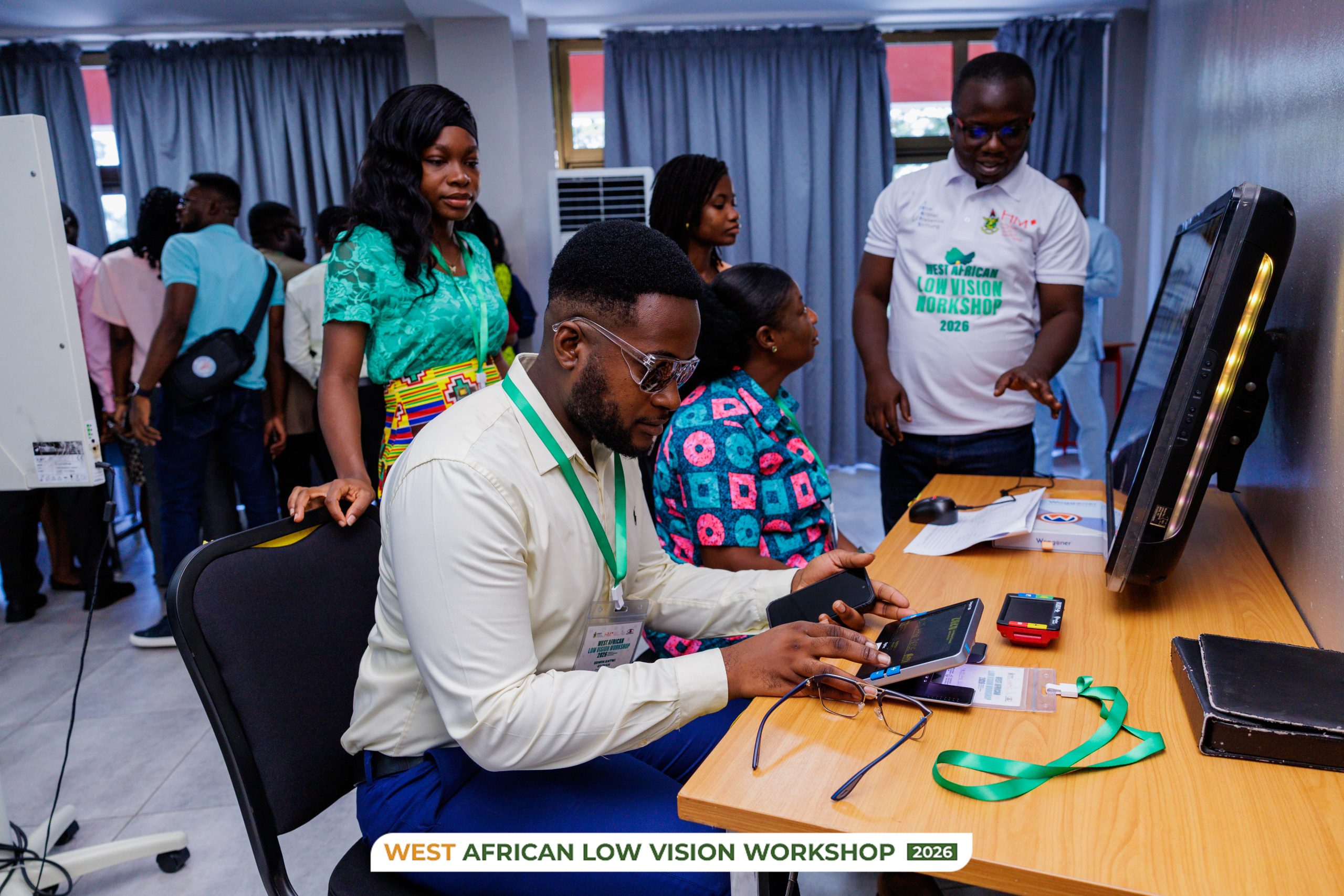
The Workshop brought together clinicians, researchers, educators and policymakers to strengthen rehabilitation services for people living with visual impairment across the region. It featured a series of guest lectures, scientific sessions, practical trainings, and panel discussions focused on strengthening low vision care in Africa. The guest lectures and presentations covered visual function assessments for the visually impaired, evidence synthesis in low vision care, the effects of visual aids on visual function, and strategies for improving clinical outcomes. Participants also received detailed training on optical and non-optical low vision aids, rehabilitation approaches, and case history evaluation through hands-on training sessions. A panel discussion examined clinical perspectives on low vision service delivery, while reflection sessions identified key lessons, challenges, and the way forward. Additional sessions addressed low vision in persons with co-occurring disabilities, reinforcing the need for inclusive and comprehensive rehabilitation services.
Please see below excerpts from the Workshop. You may kindly watch the 20-minute guest lecture of Dr Eldad Agyei-Manu (from time stamp 1:58:45 to 2:18:45) on YouTube via this link: Evidence Synthesis In Low Vision Care: Bridging Research Evidence And Resource-Appropriate Clinical Practice In Africa.
Photo credit: HM KNUST Low Vision Project
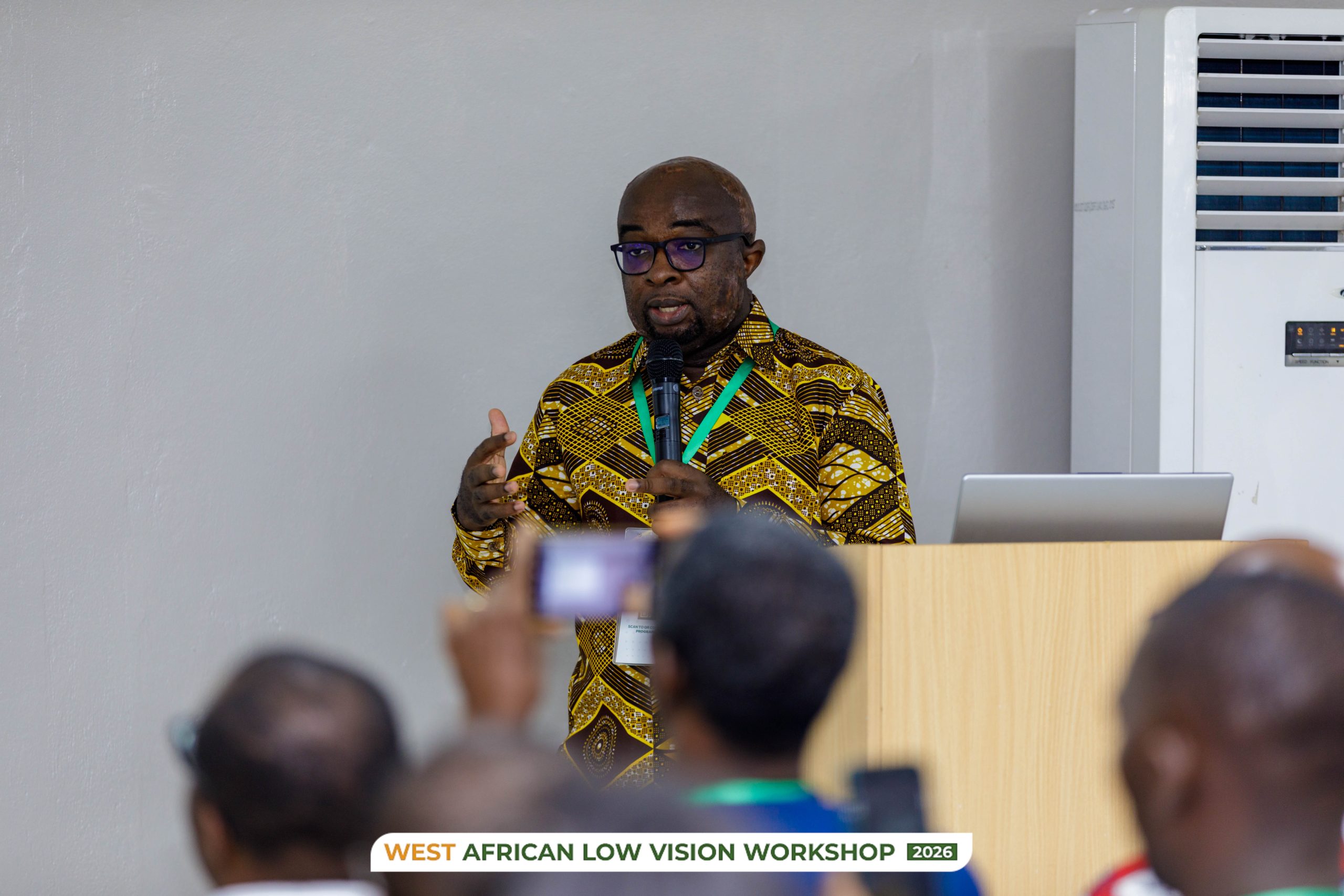
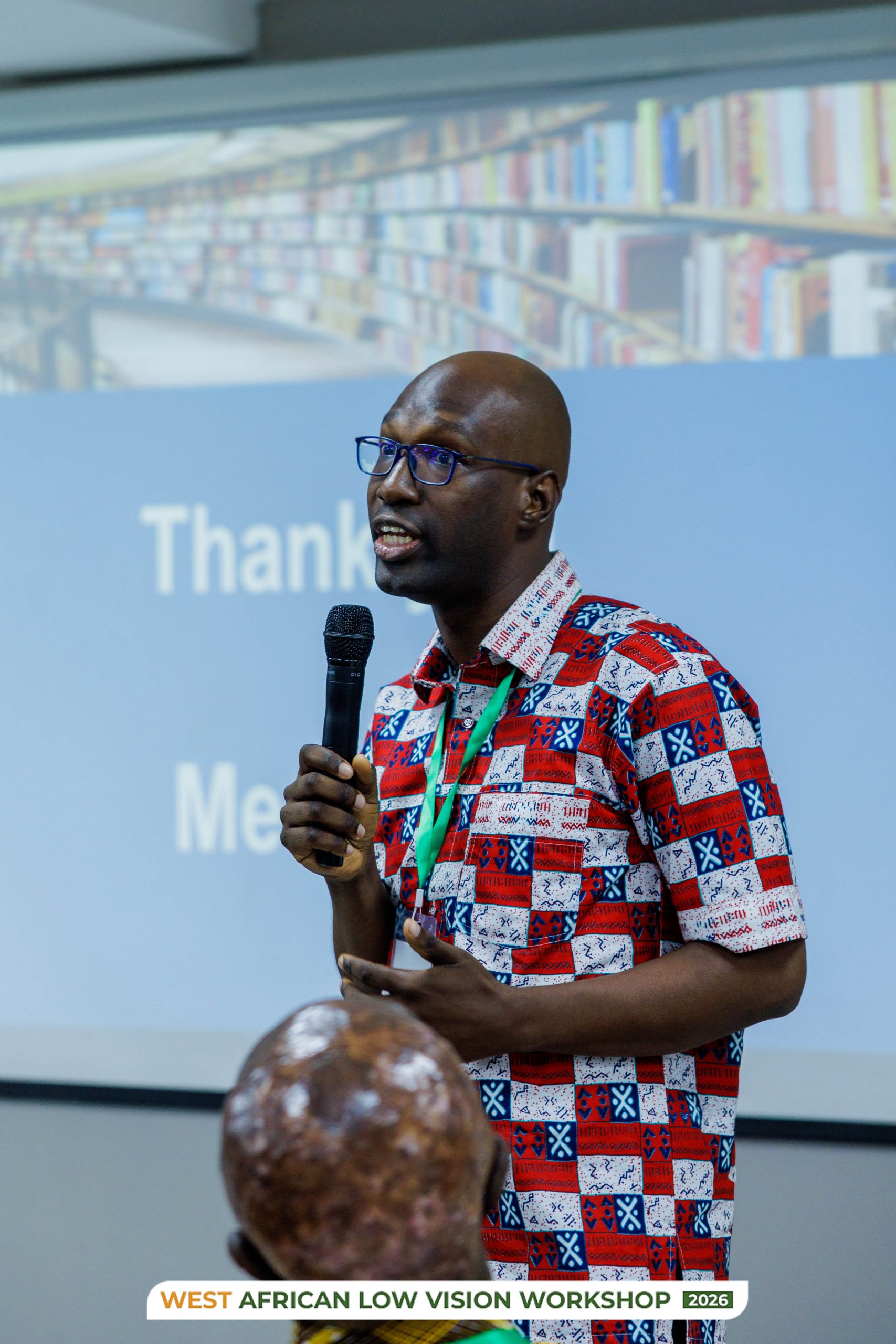
Dr Eldad Agyei-Manu, Founder & CEO of EAM Consult, delivering his guest lecture on evidence synthesis in low vision care
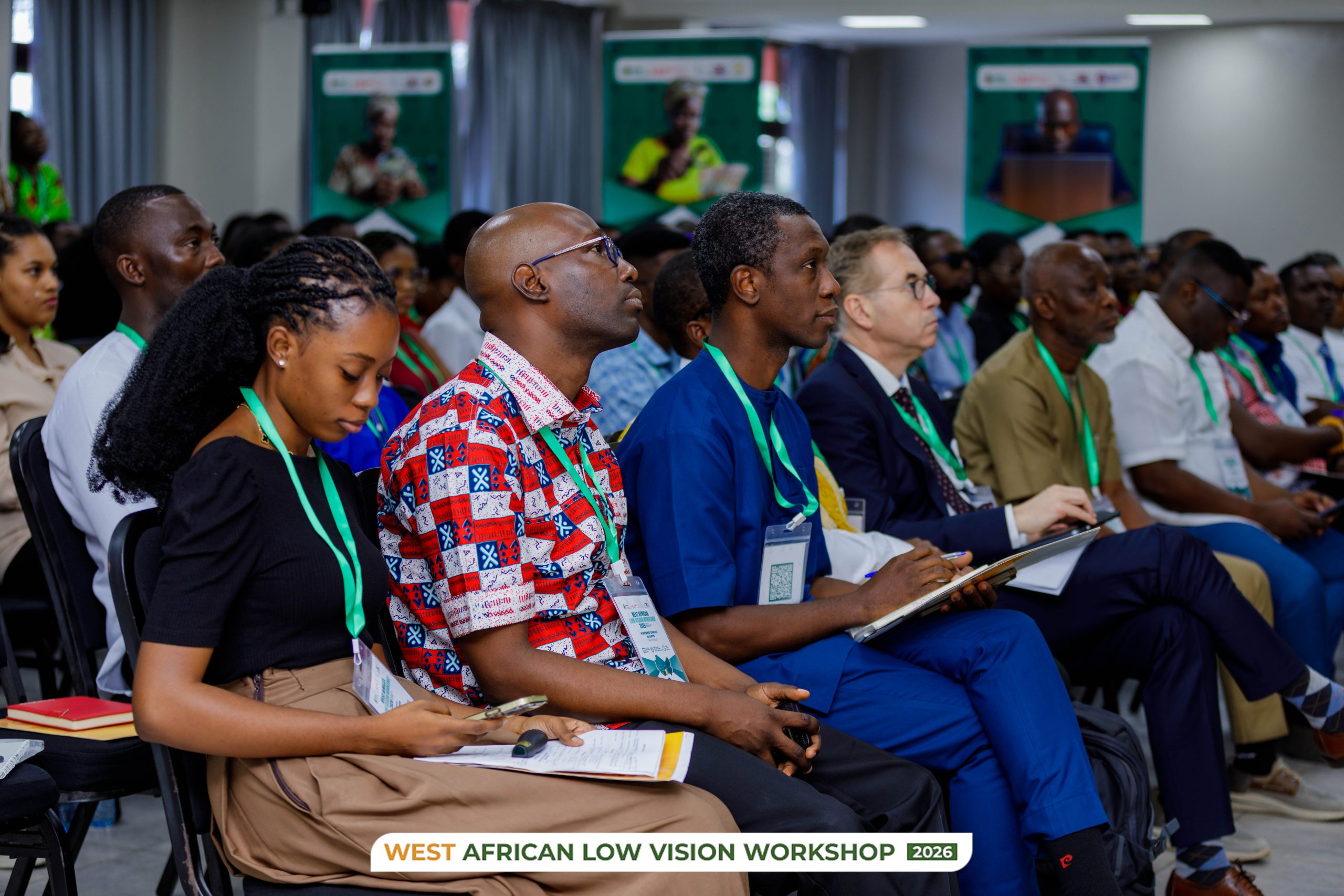
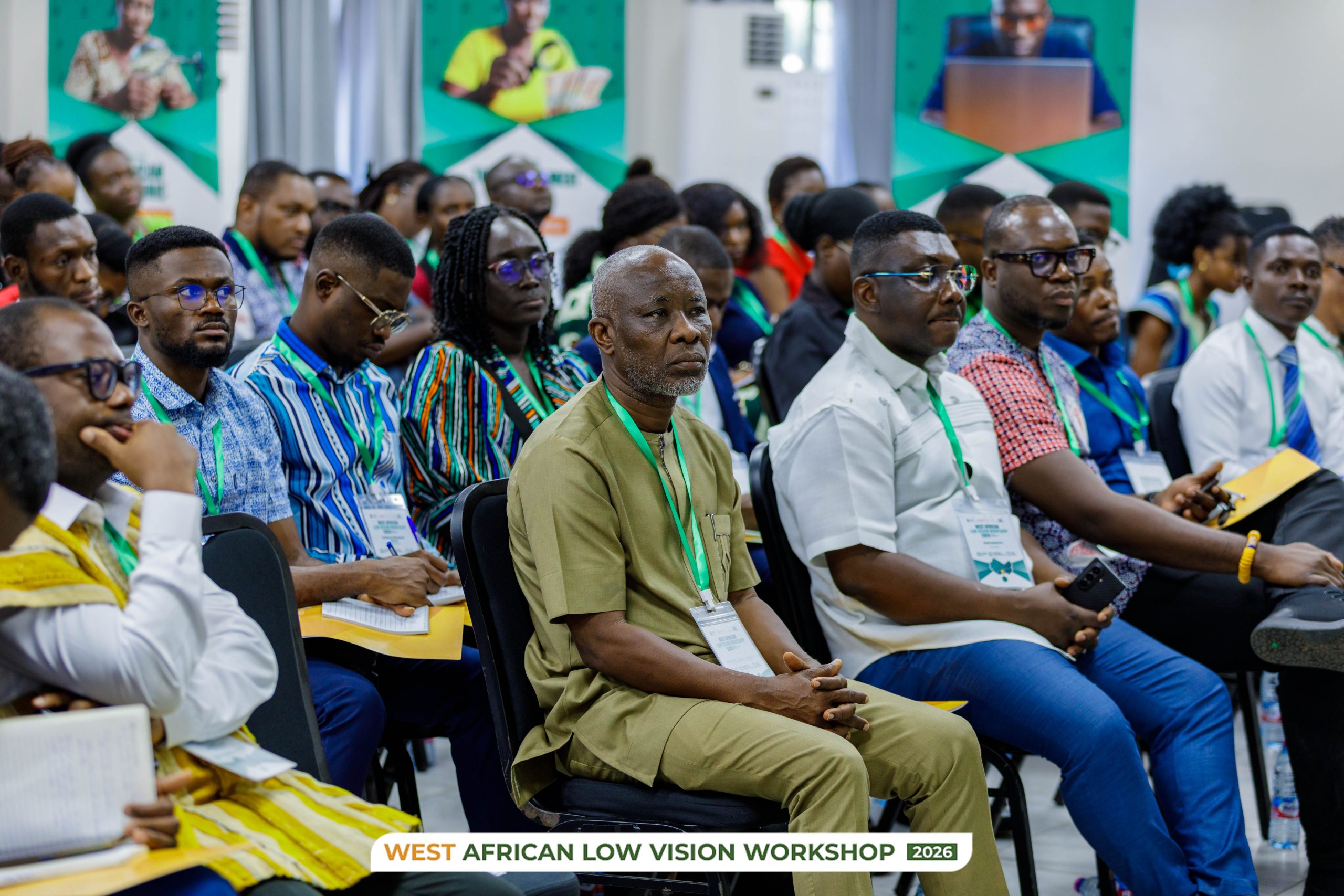
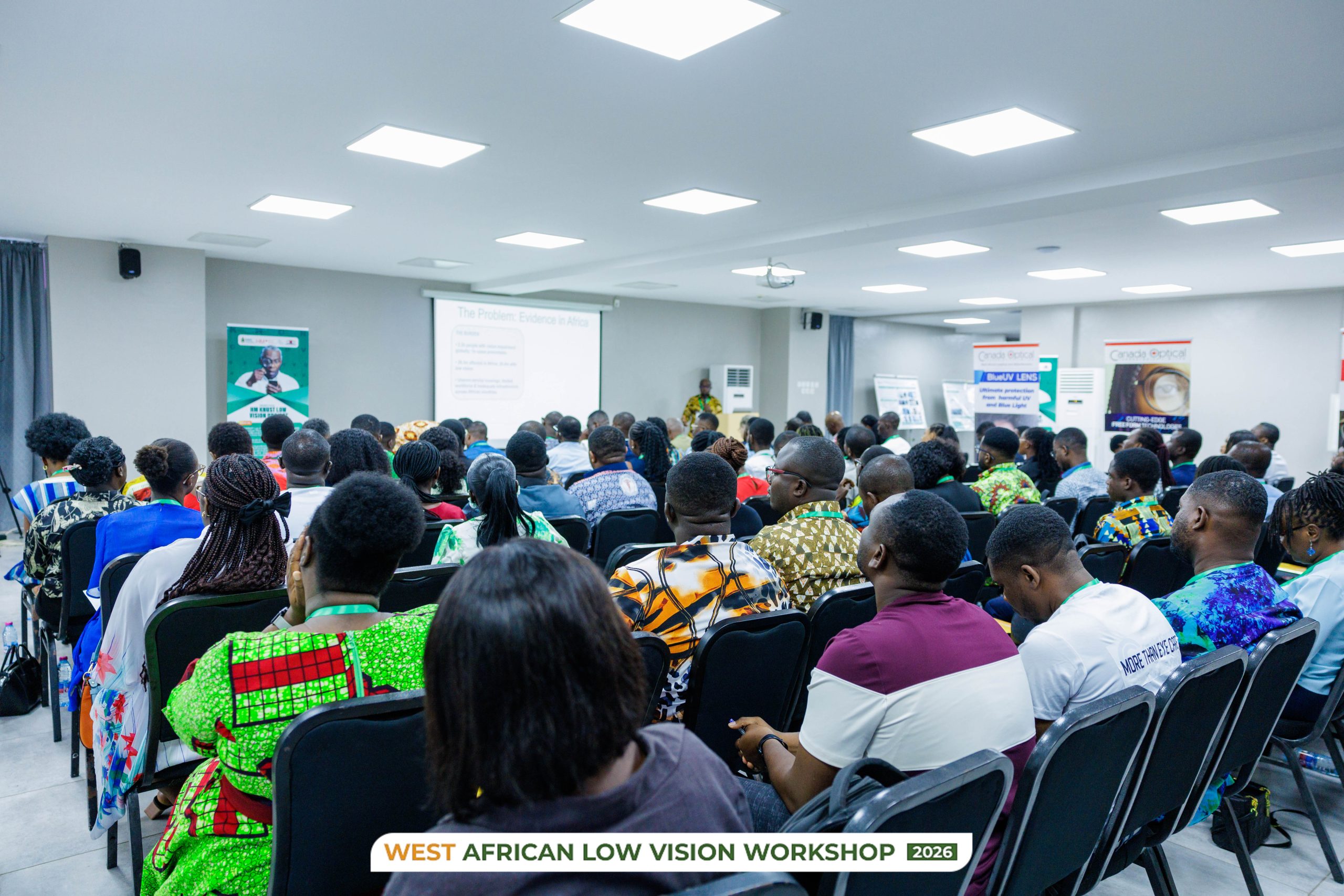
Opening address by Dr. Kwadwo Owusu Akuffo, Senior Lecturer in the Department of Optometry and Visual Science, KNUST and Ghana Lead for the HM KNUST Low Vision project
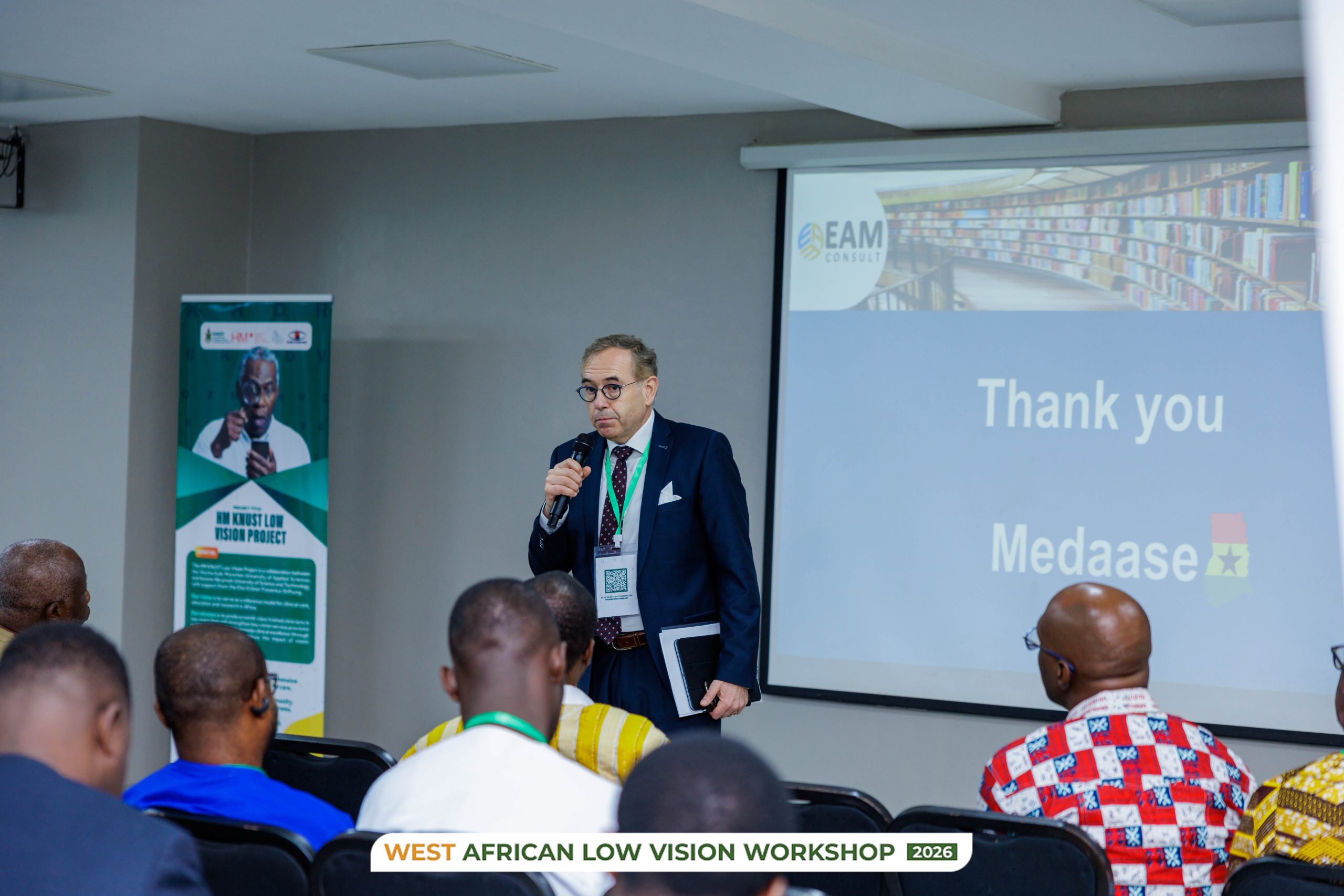
Keynote address by Prof. Werner Eisenbarth, German Lead for the HM KNUST Low Vision Project
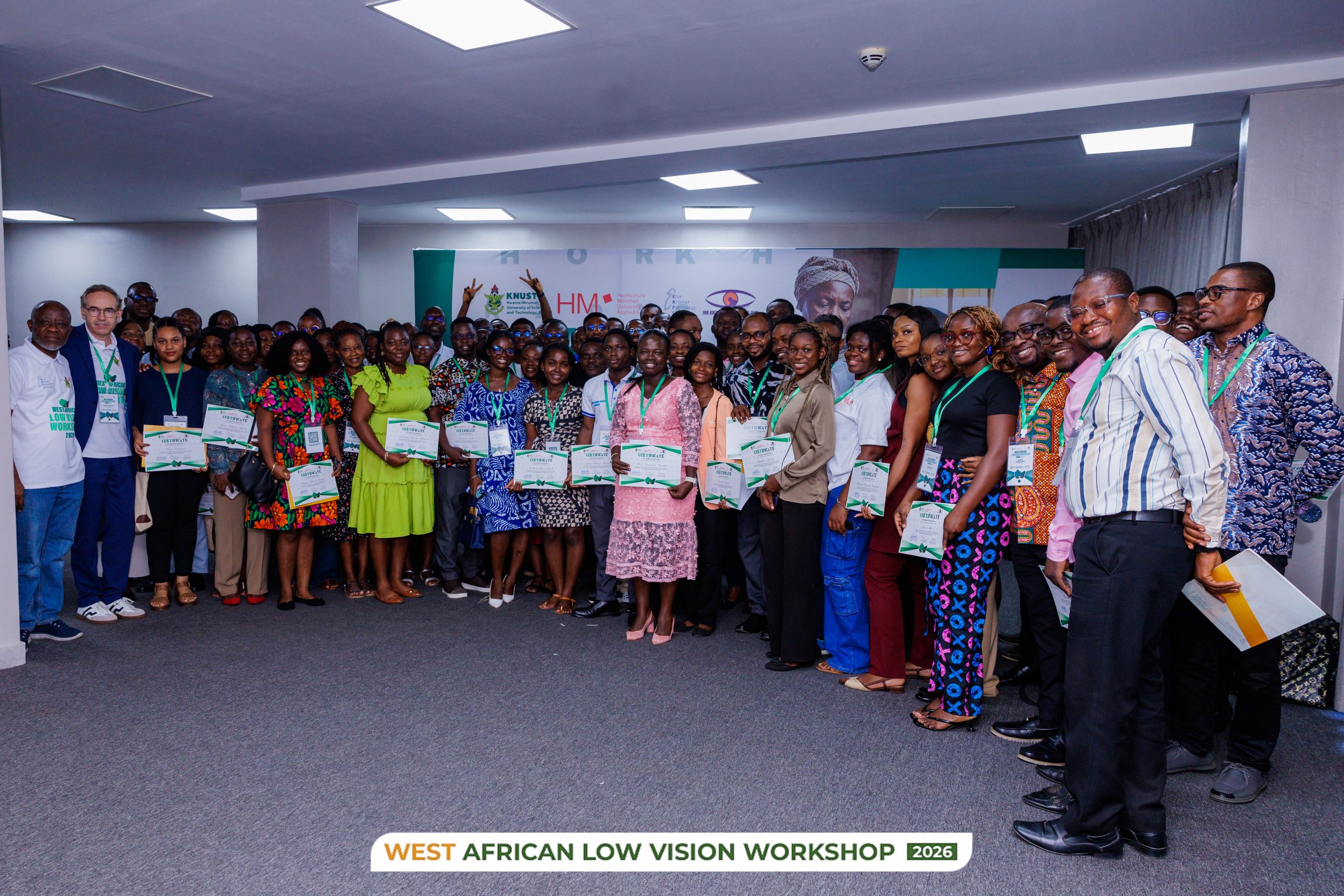
A snapshot of all participants (eyecare professionals)
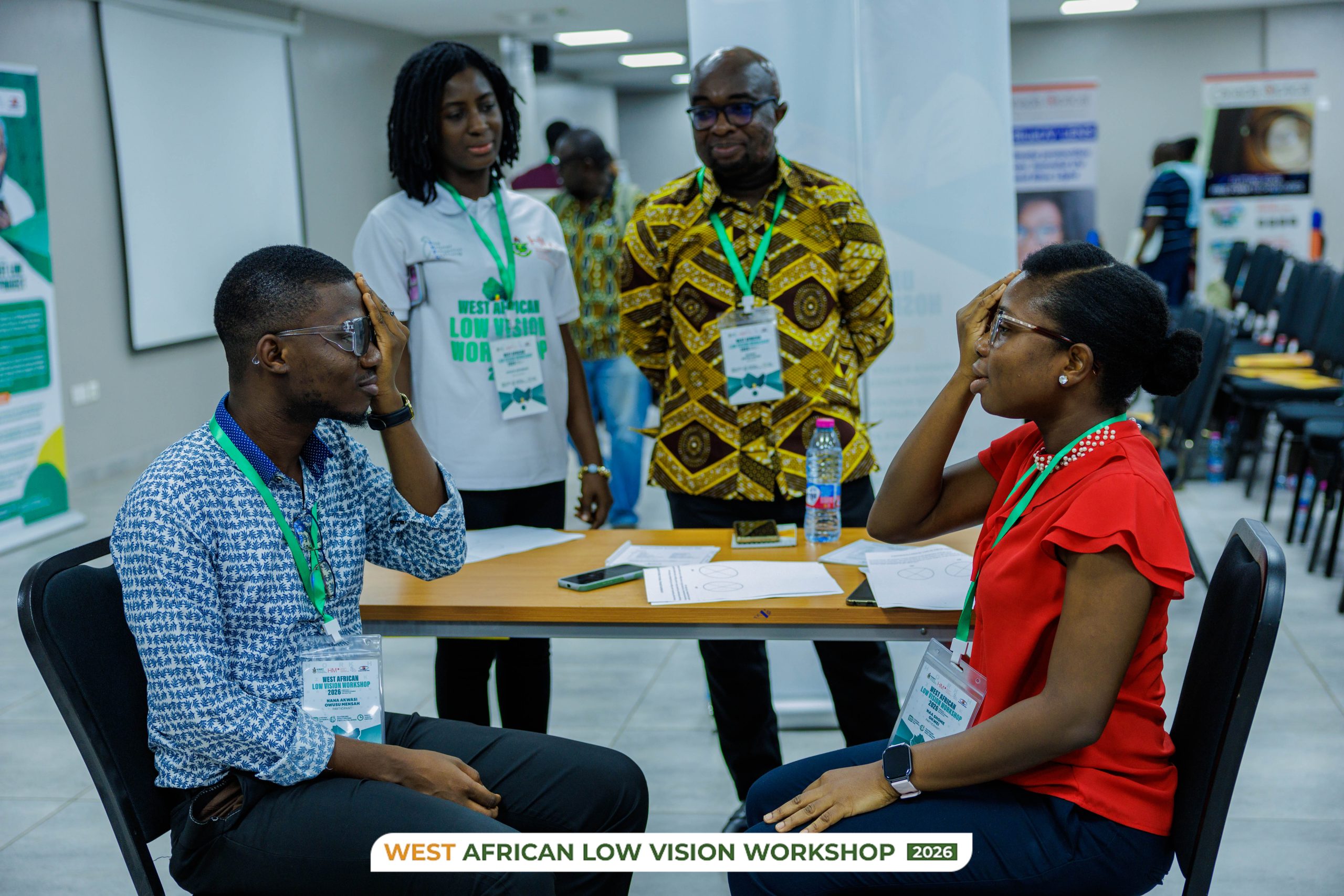
Practical training sessions for participants
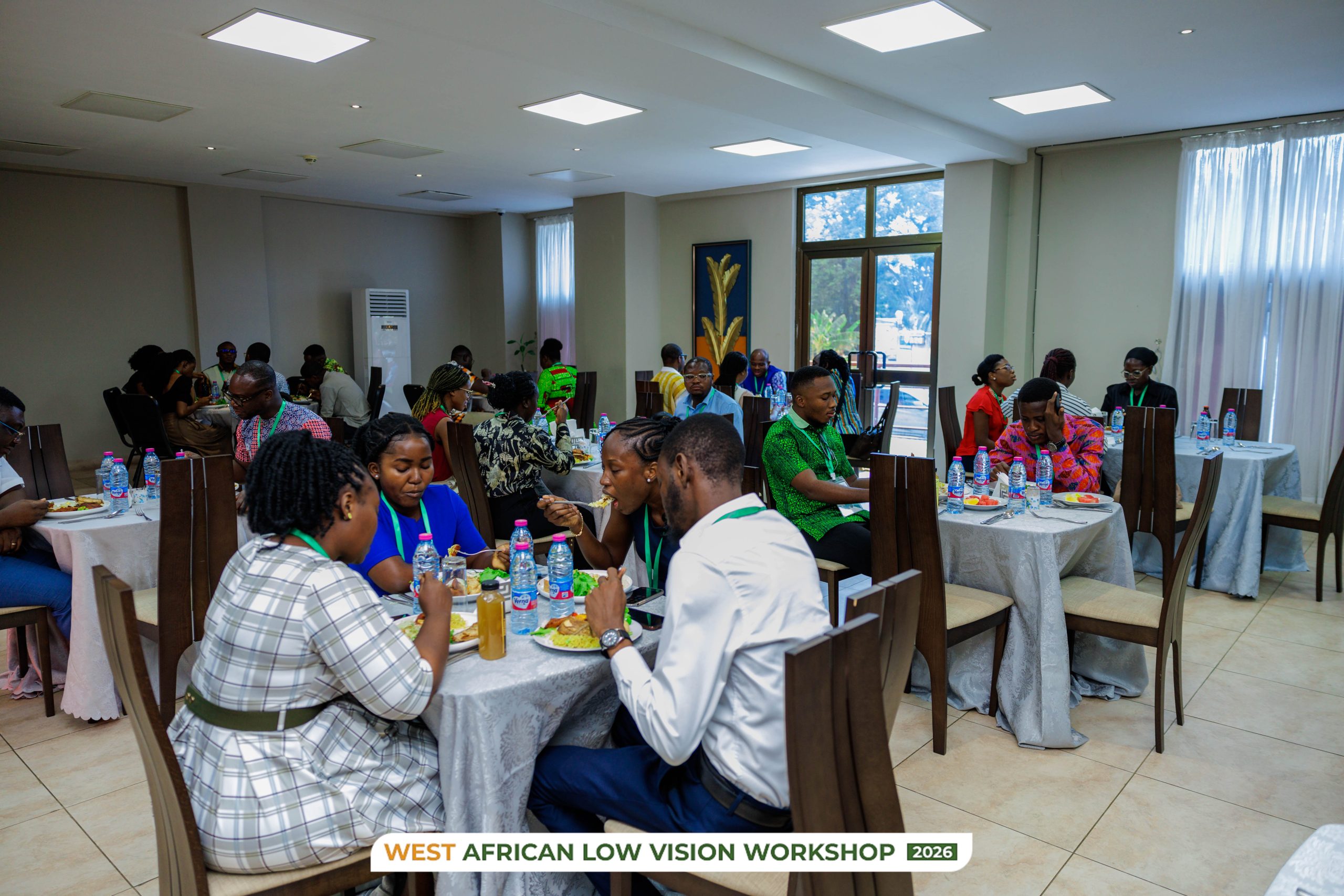
Lunch break
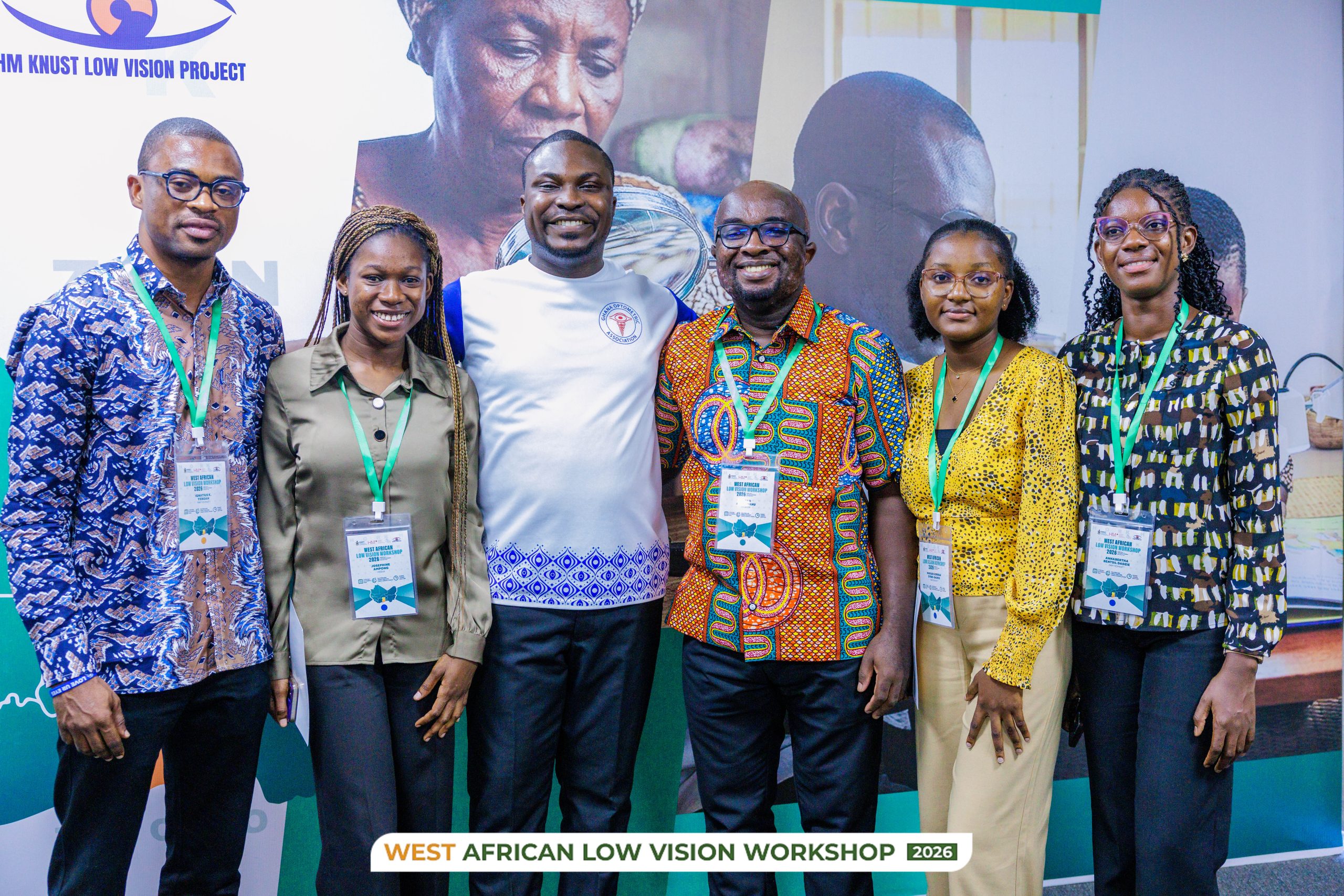
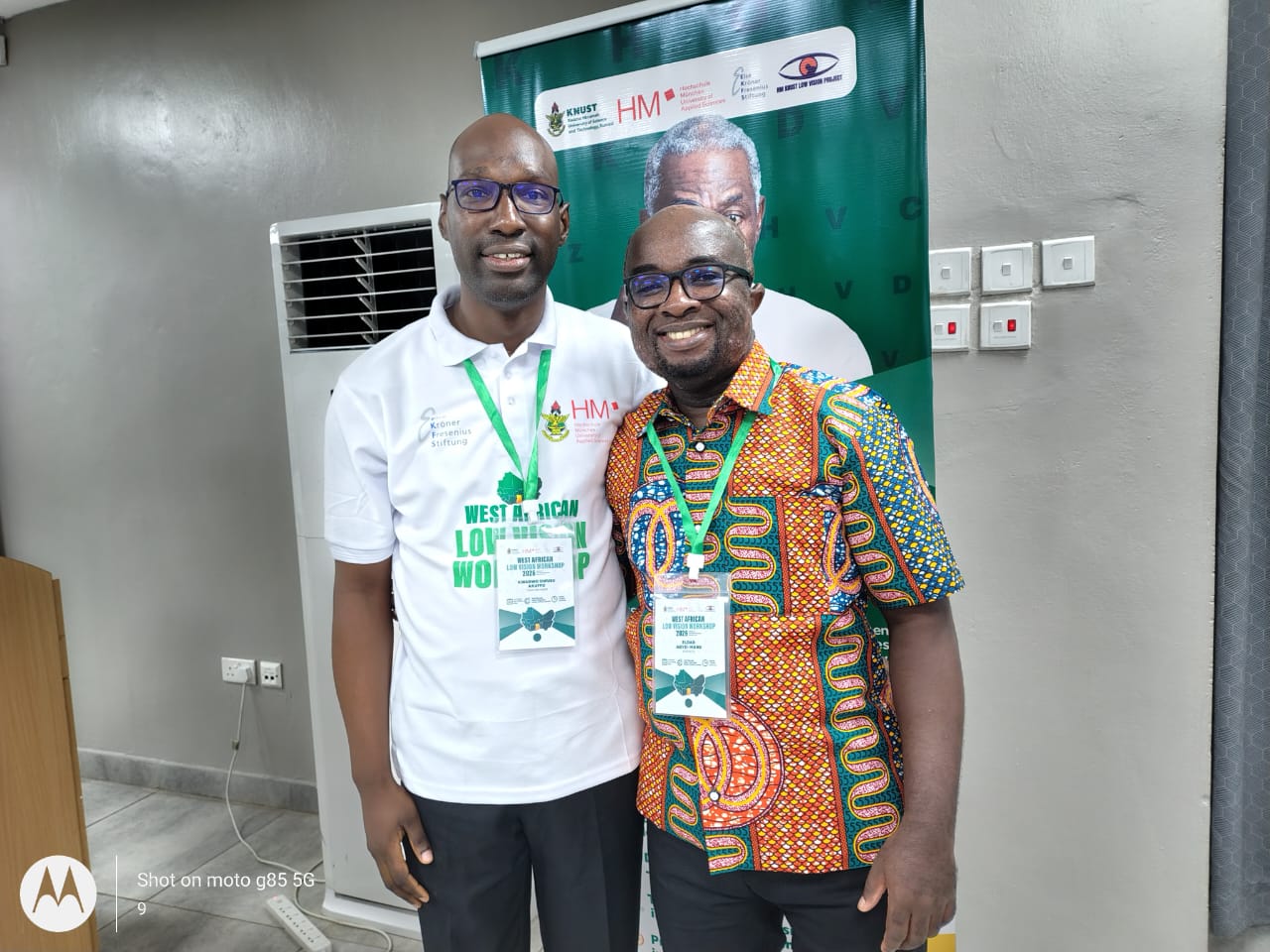
Dr Kwadwo Owusu Akuffo (pictured left) and Dr Eldad Agyei-Manu (pictured right)